


Texas Method in Durata: one training max, three different days
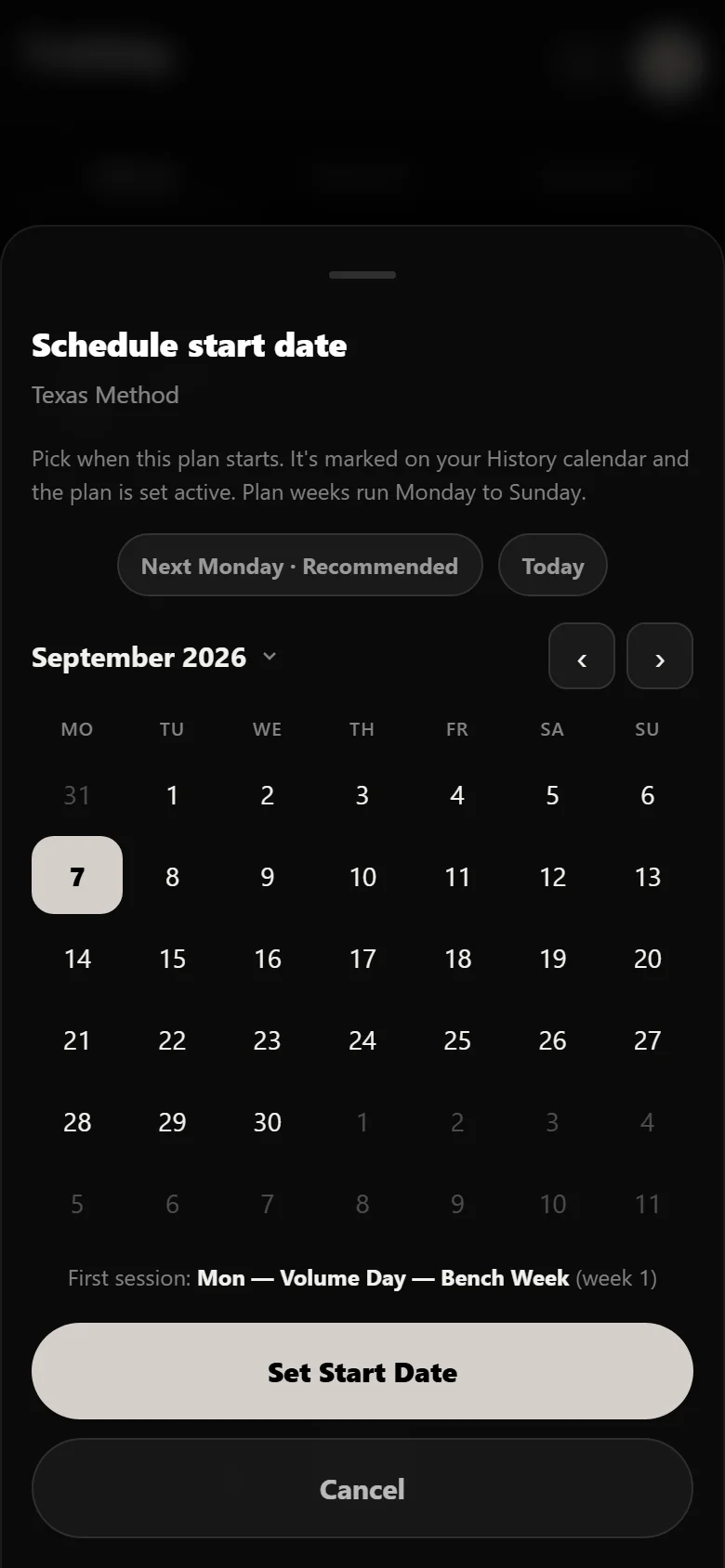
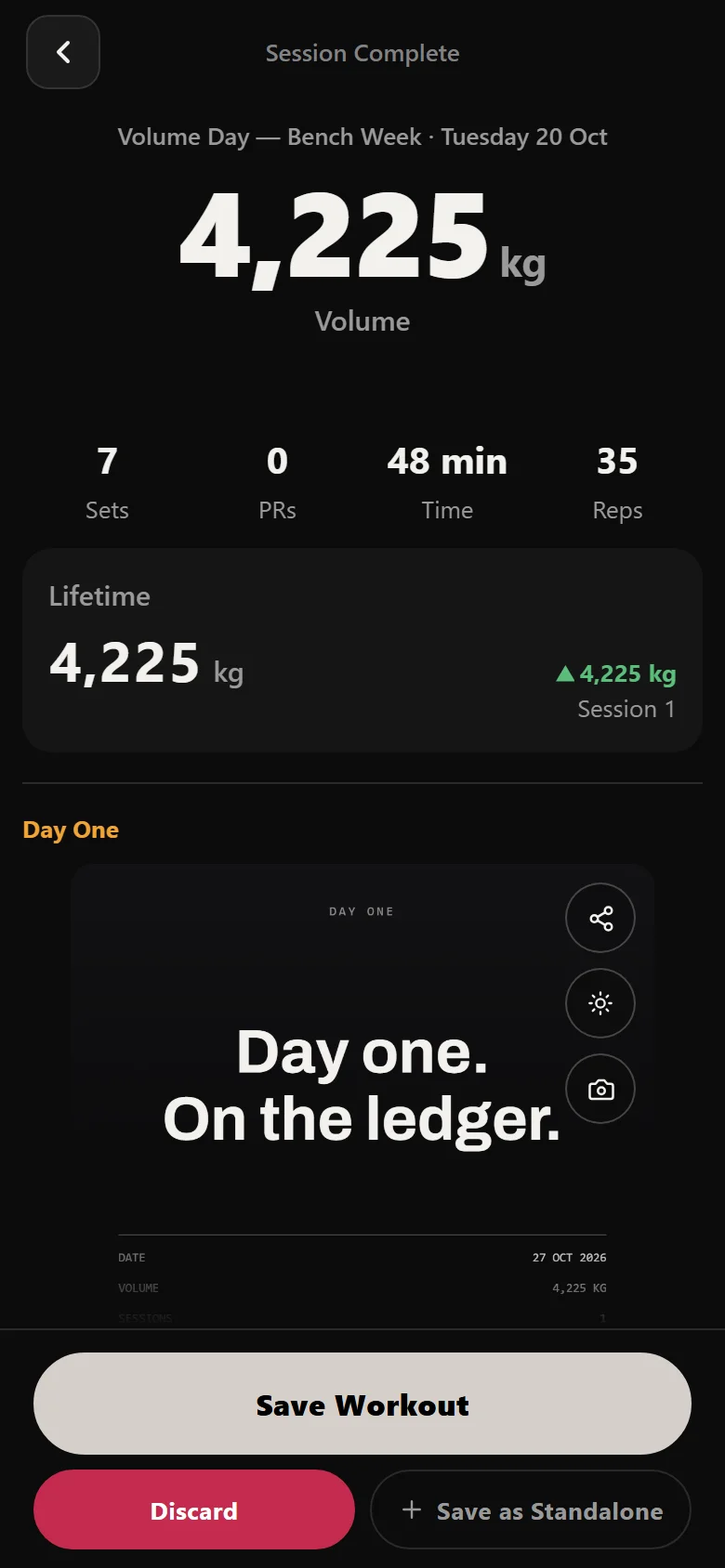
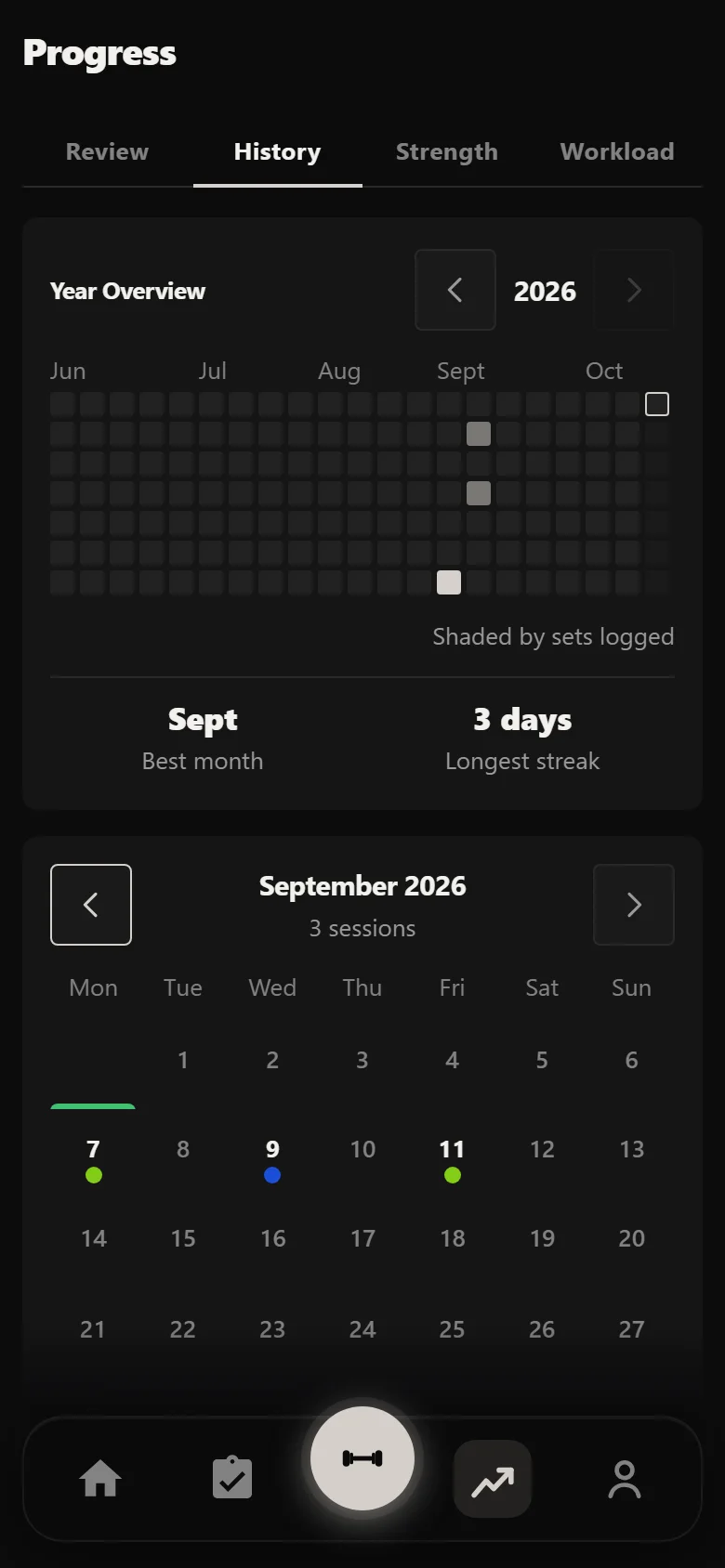
Texas Method is the intermediate program that stops trying to add weight every session and adds it once a week instead. Monday is volume, five sets of five at 90% of the training max. Wednesday is recovery, two sets of five at 72% of it, which is 80% of Monday's weight. Friday is intensity: one set of five at the full max, aimed at a new five-rep best. Make all five and the training max goes up, which moves Monday and Wednesday with it.
Every weight, rep and estimate below was computed by the real engine on a live drive: six weeks, eighteen sessions, one number per lift doing all the arithmetic. The squat opens off a 140 kg training max.
Starting the program
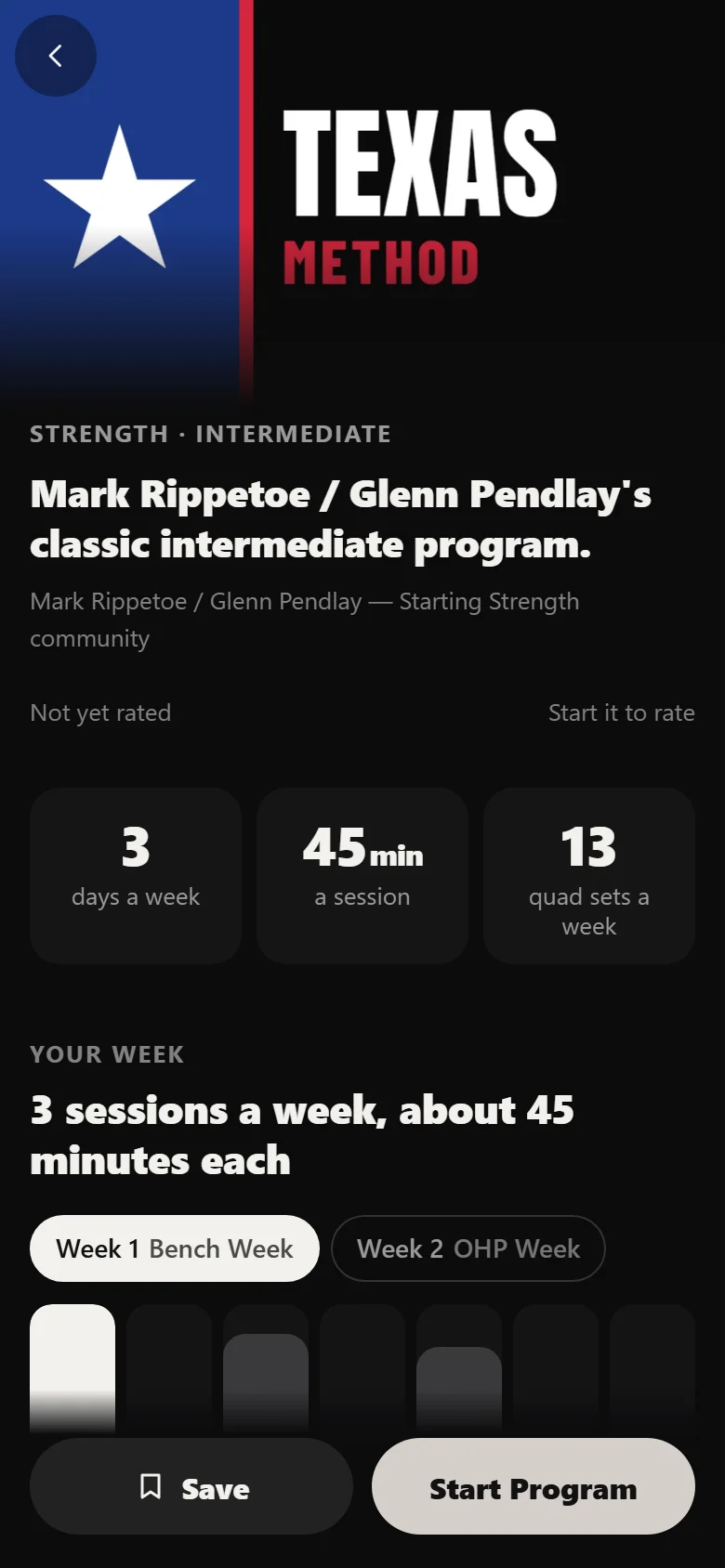
In Discover, Texas Method sits on the Strength shelf, marked Intermediate, at three days a week. Search finds it by name, or Filter narrows the shelves by level and days a week. Tap the cover for a quick look, then View Program for the full page.
It is for a lifter who has outgrown daily linear progression and wants a weekly wave instead: hard volume early, a light day in the middle, and a Friday built around one heavy set.
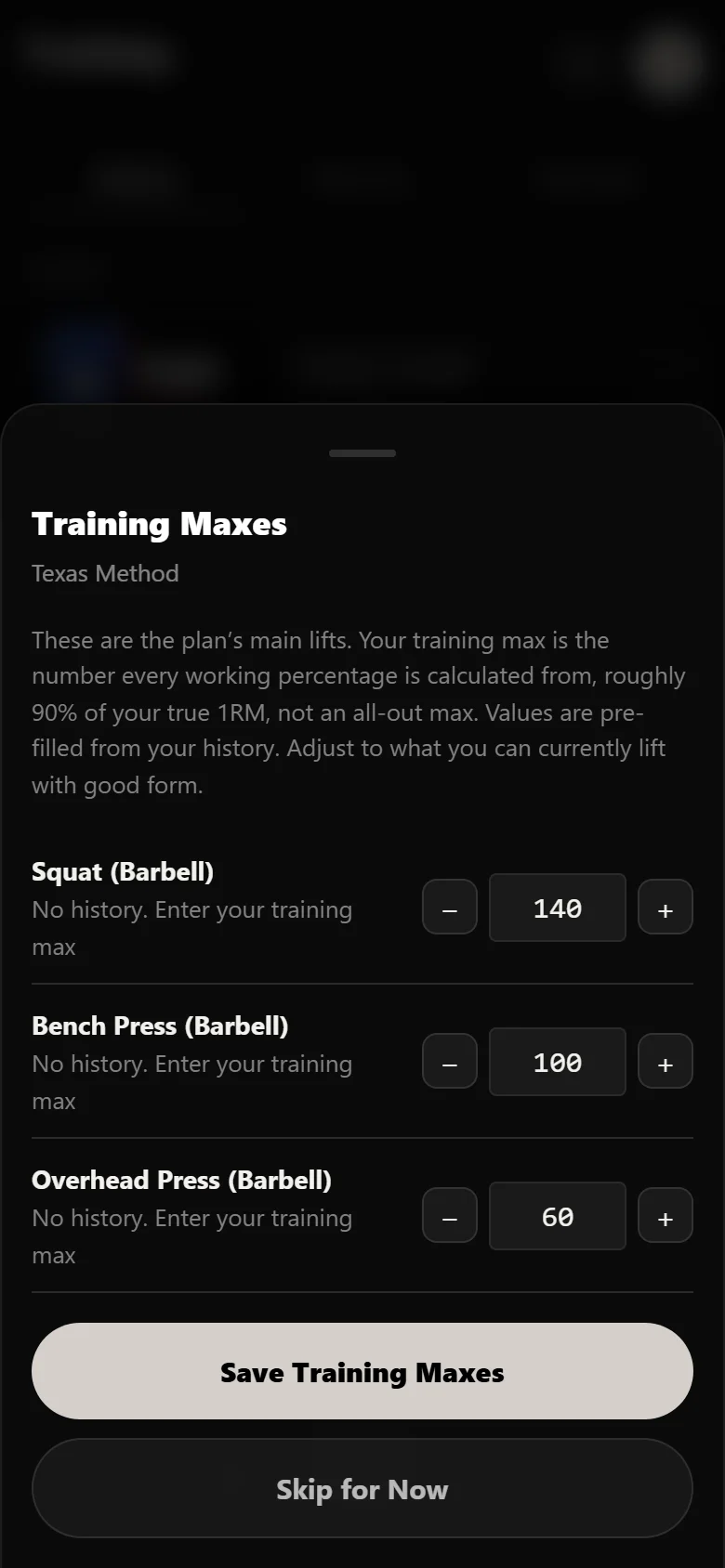
Setup asks for training maxes, not weights. Squat, bench press and overhead press each get one number, and every set on all three days is a percentage of it. This run enters 140 kg for the squat, 100 kg for the bench press and 60 kg for the overhead press. The deadlift sits outside that system on a plain working weight, and this run starts it at 130 kg.
Texas Method opens deliberately below what you could hit today. The point is not the first week.
Volume, recovery, intensity
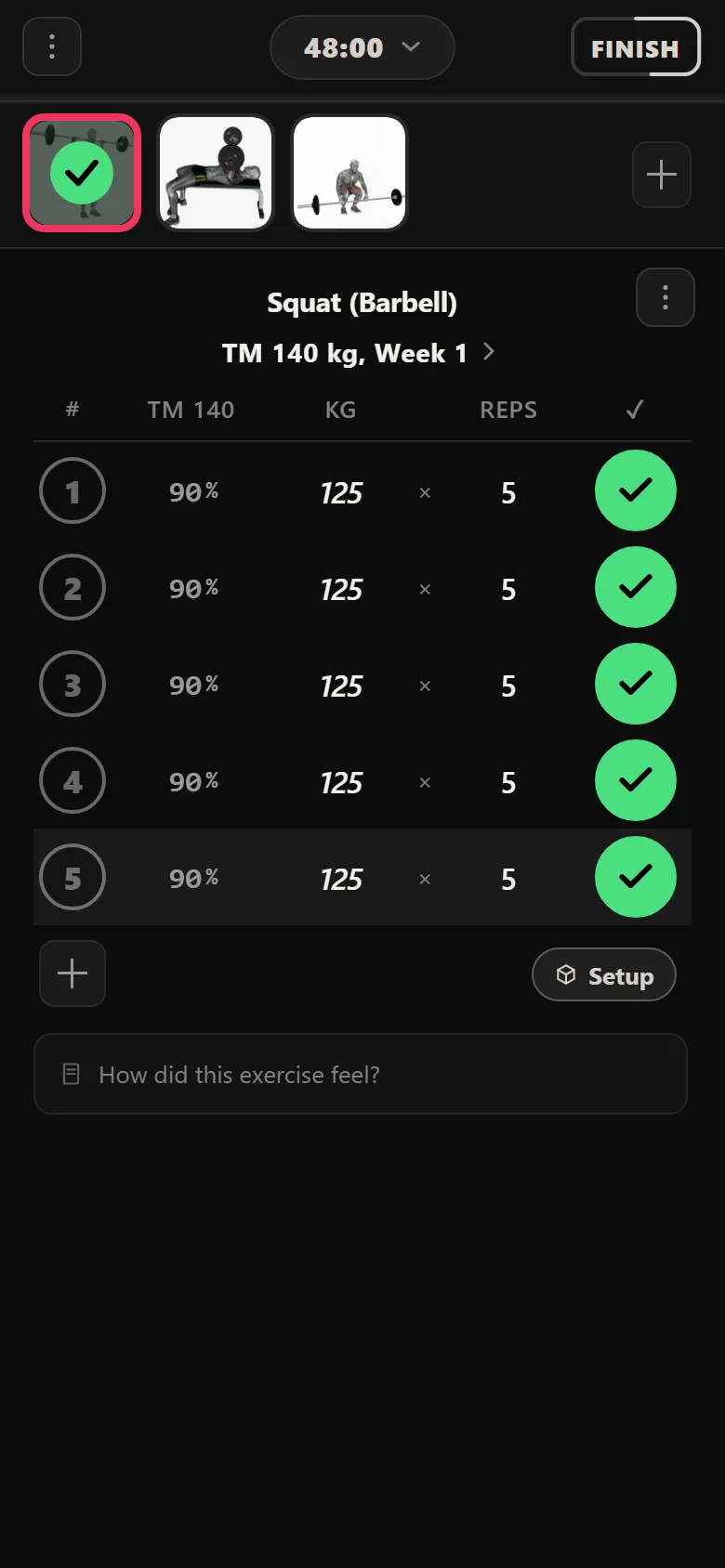
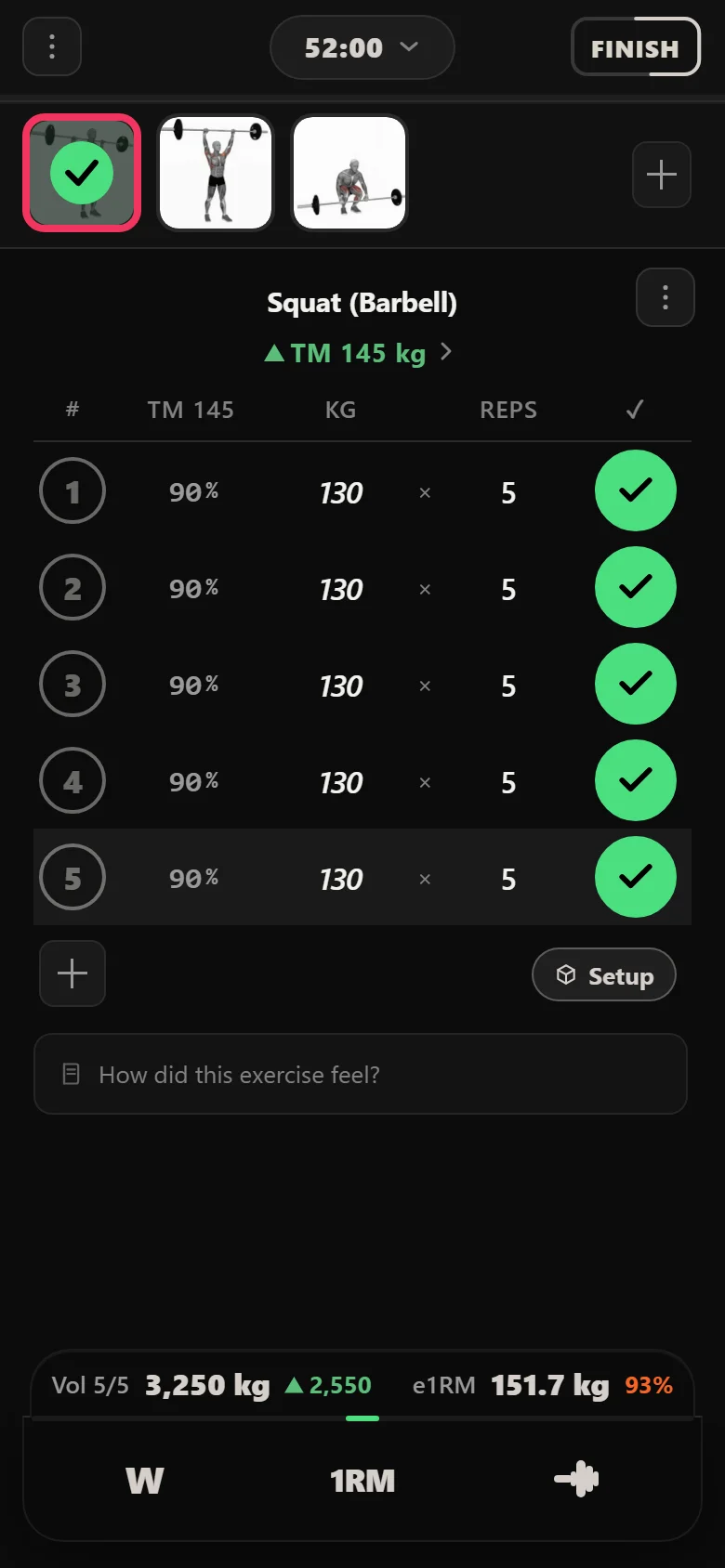
Monday's squat is five sets of five at 125 kg. Nothing about that number was entered. It is 90% of the 140 kg training max, resolved by the app, and it is the hardest session of the week by total work rather than by weight on the bar.
Wednesday drops to 100 kg for two sets of five. That is not a bad day or a missed one. It is 72% of the same training max, which is 80% of Monday's weight, prescribed light on purpose, and it is what makes Monday's volume survivable while keeping the squat at three days a week. Alongside it sit chin-ups to failure and five sets of ten back extensions, which Rippetoe calls optional if you're tired. Neither carries a progression rule: they are there to be done rather than to be pushed.
The presses work the same way, with one wrinkle: bench press and overhead press alternate as the week's primary press. Whichever one is primary that week takes the heavy volume and the Friday set, and the other drops back to the recovery day.
The one set that changes anything
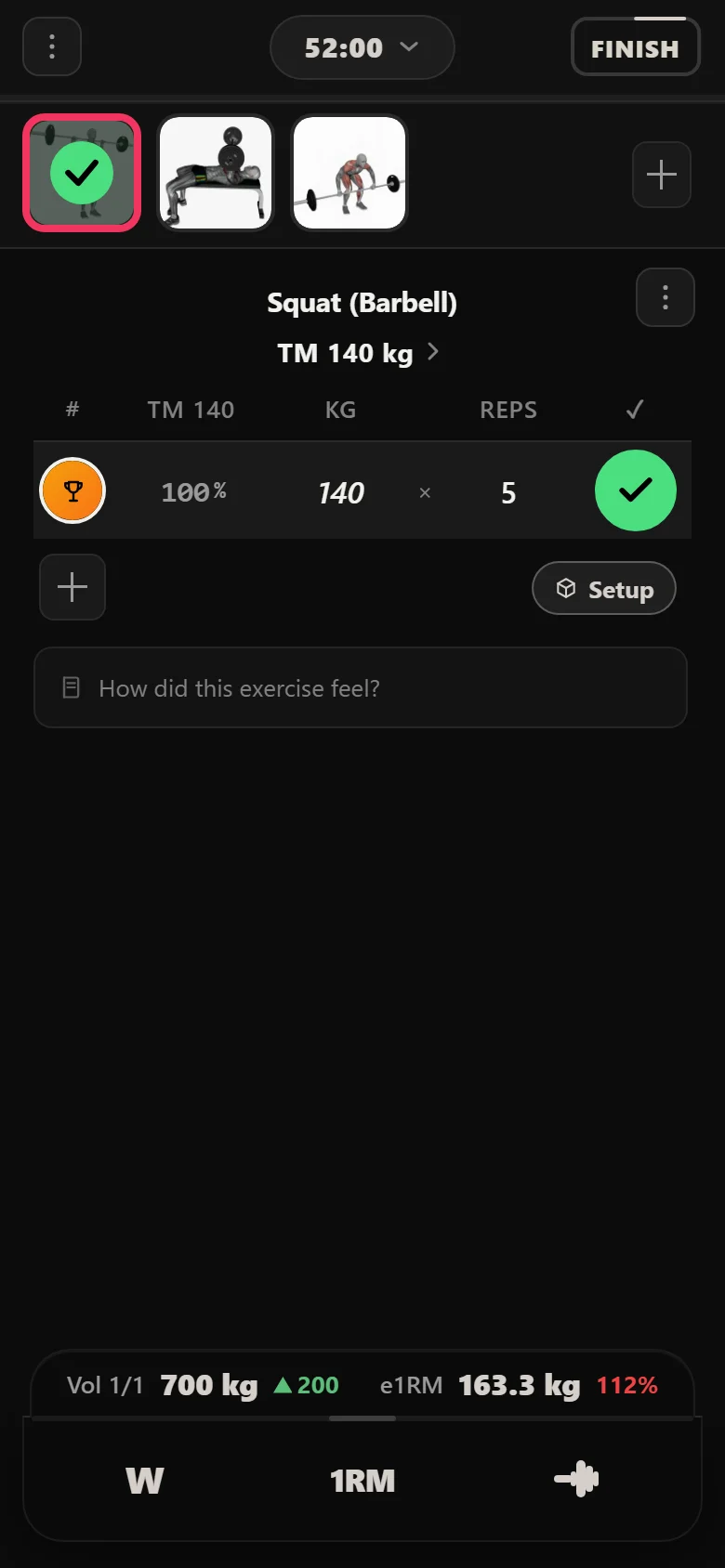
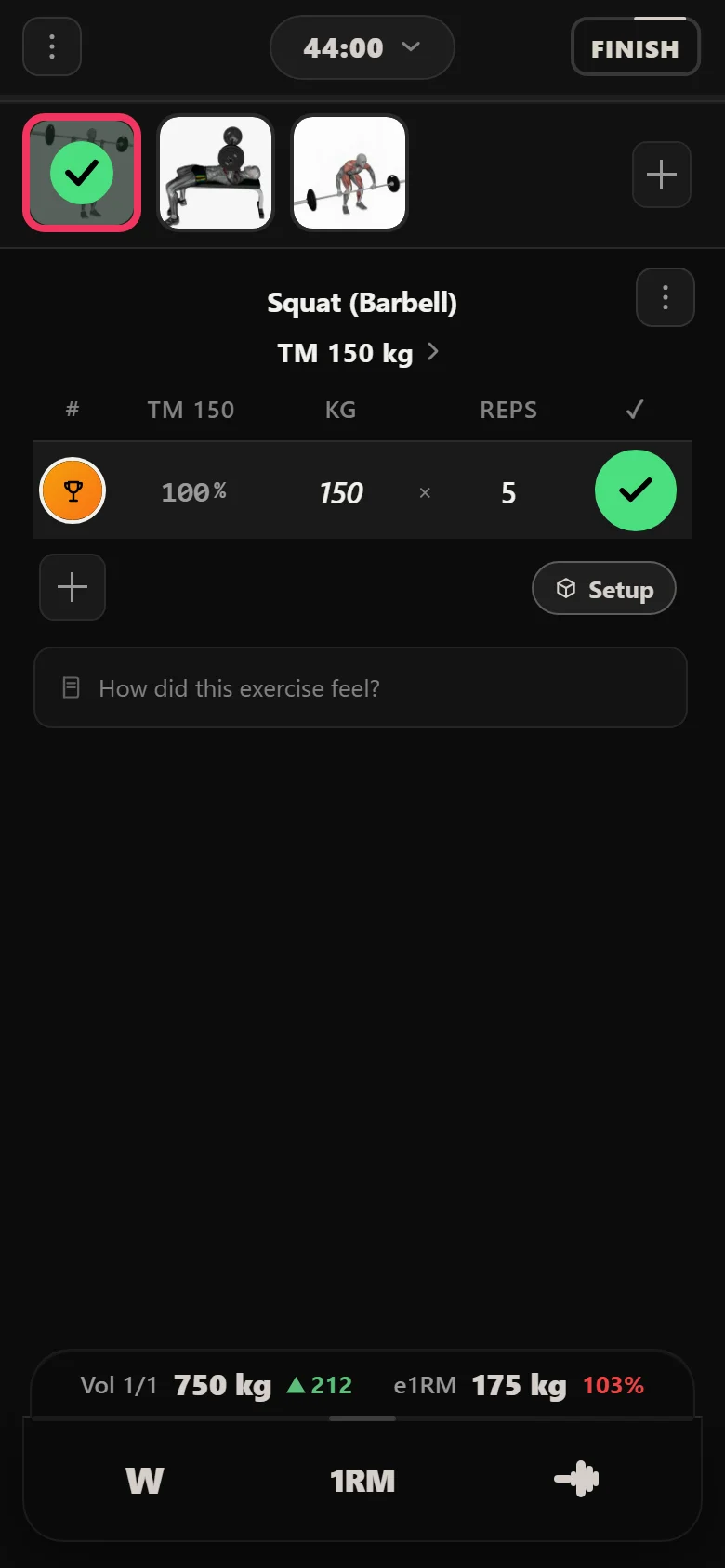
Friday is a single work set of five at 140 kg, the full training max. Rippetoe asks for a new five-rep max there, or close to it. This run made all five.
That set is the entire progression rule. There is no weekly increment to apply, no decision at the end of the session, and nothing to type in beyond the reps. Make the five and the app raises the training max, and because Monday and Wednesday are both percentages of it, the following week's volume day moves without being touched. It goes from 125 kg to 130 kg on the same 90% prescription, off a 145 kg training max.
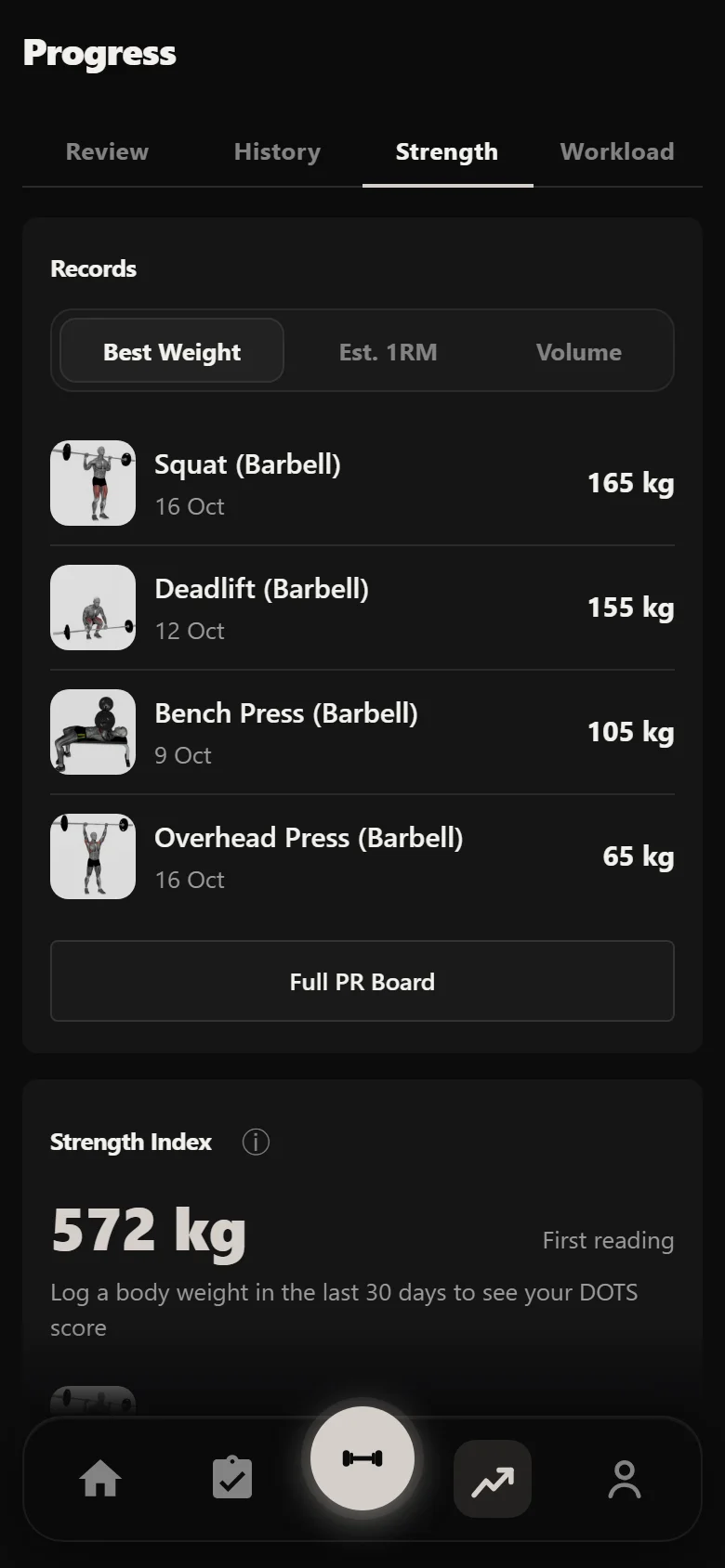
The presses climb at half the squat's rate, and the reason is scheduling rather than progression. The bench press's training max finished the block at 107.5 kg from 100 kg, and the overhead press's at 67.5 kg from 60 kg, because each one only gets an intensity day every other week. The deadlift is outside the wave entirely, showing up once a week for a single top set on plain linear progression: it climbed from 130 kg to 155 kg, with 160 kg set for the next Monday.
Six weeks of it
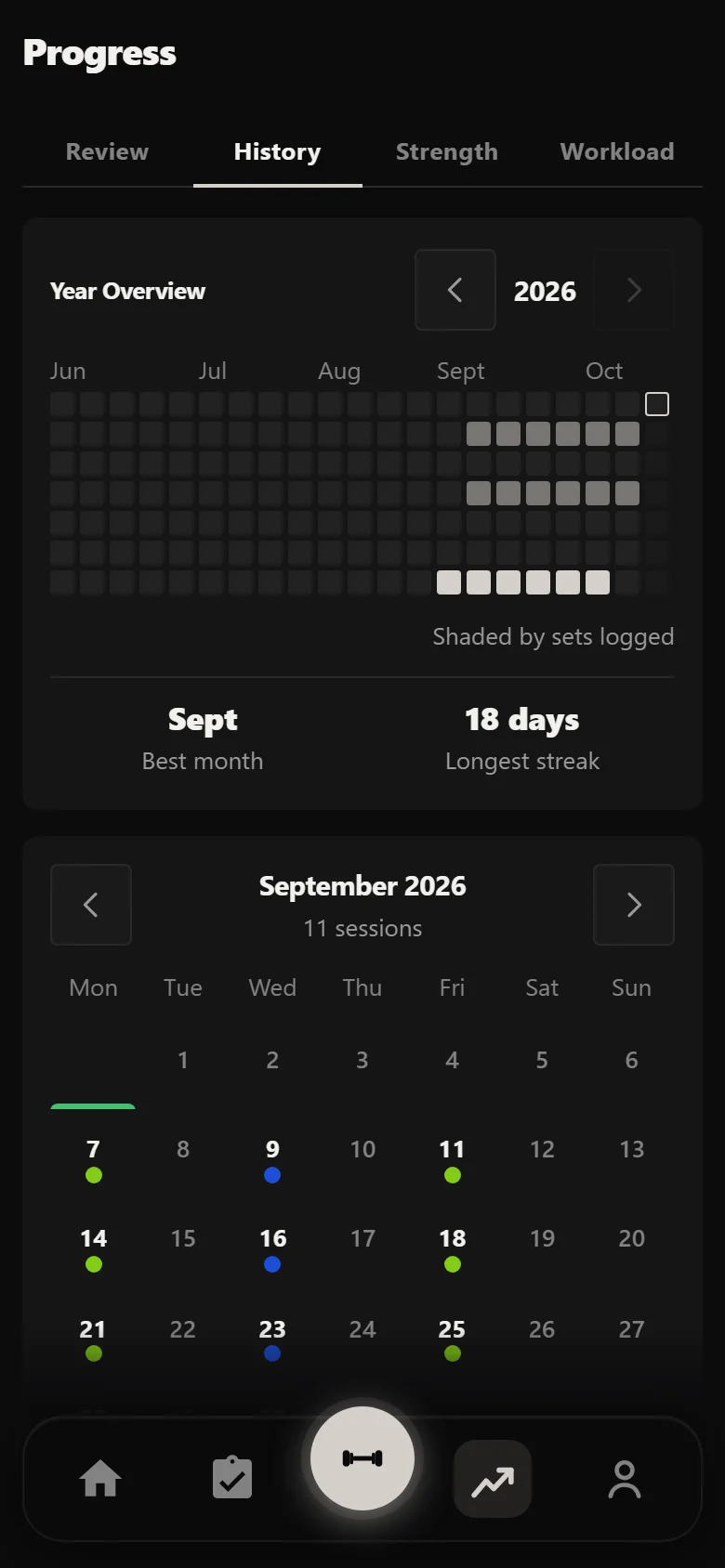
Repeated for six weeks, Friday's five are made every time and the training max takes a step each week. It starts at 140 kg and finishes at 170 kg. The last Friday of the block is a set of five at 165 kg, and the volume day that fed it was 147.5 kg, above where the intensity day started.
The estimated one-rep max chart shows the shape this produces: a sawtooth that climbs. Each Friday is the week's high point, Wednesday its low, and every Friday sits above the last, because Friday is the only session where the training max can change.
None of the thirty kilos was chosen. The lifter's input for the whole block was a rep count.
Squat (Barbell): top set, every session
- 125S1 Session 1 — wk 1 volume
- 100S2 Session 2 — recovery
- 140S3 Session 3 — intensity
- 130S4 Session 4 — wk 2 volume
- 105S5 Session 5
- 145S6 Session 6 — intensity
- 135S7 Session 7 — wk 3 volume
- 107.5S8 Session 8
- 150S9 Session 9 — intensity
- 140S10 Session 10 — wk 4 volume
- 112.5S11 Session 11
- 155S12 Session 12 — intensity
- 145S13 Session 13 — wk 5 volume
- 115S14 Session 14
- 160S15 Session 15 — intensity
- 147.5S16 Session 16 — wk 6 volume
- 120S17 Session 17
- 165S18 Session 18 — last intensity day
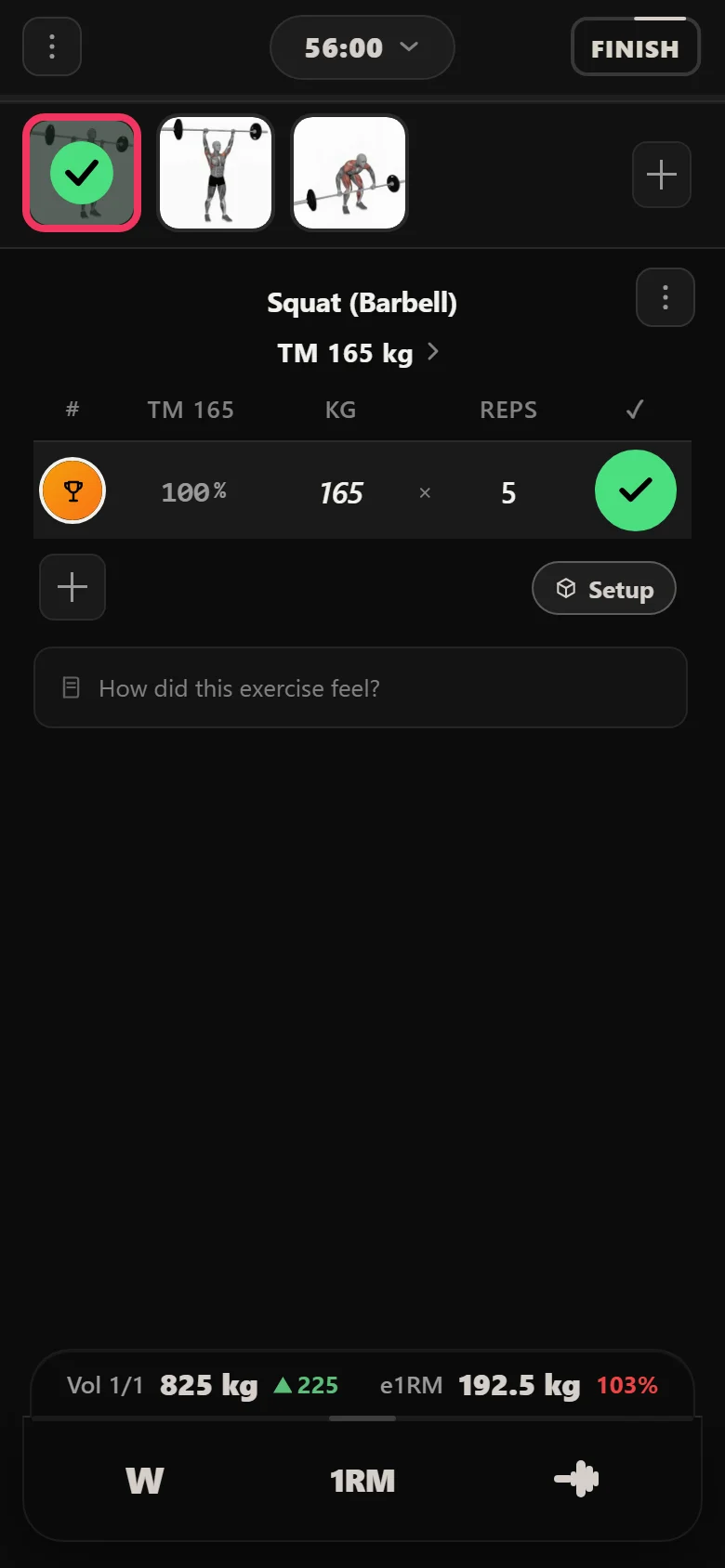
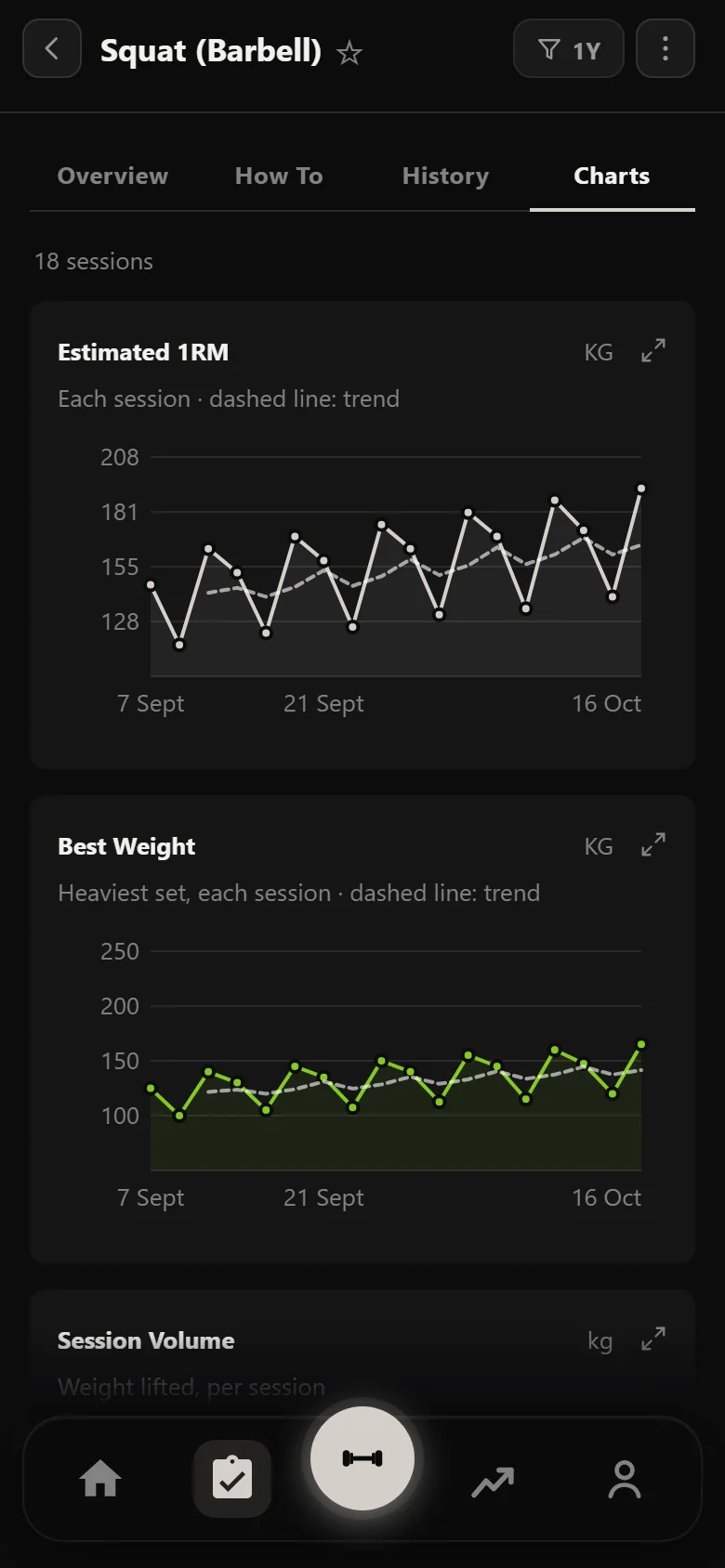
The same set of five, on the same day of the week, five weeks apart. Every jump between them came from making the five.
Common questions
What is Texas Method?
An intermediate strength program credited to Mark Rippetoe and Glenn Pendlay, built on a weekly rather than a session-by-session cycle. Monday is high-volume work at a percentage of a training max, Wednesday is a deliberately light recovery day, and Friday is a single heavy set of five that decides whether the training max goes up. It is the usual next step once adding weight every session stops working.
What is a training max, and why doesn't the program just ask for weights?
A training max is one number per lift that every prescribed weight is a percentage of. Texas Method squats three times a week at three different intensities, so asking for three weights would mean keeping three ladders in step by hand. One max keeps them in step automatically: raise it once on Friday and Monday and Wednesday both move with it.
Why is Wednesday so much lighter than Monday?
Because it is meant to be. Wednesday's squat is 80% of Monday's weight, 72% of the same training max, so it runs at 100 kg against Monday's 125 kg in the first week. It keeps the squat at three days a week without three hard days, which is what leaves enough left in the tank for Friday.
Why do bench and press go up more slowly than the squat?
Two reasons, and neither is that they progress worse. The upper-body bump is smaller than the lower-body one, and the two presses alternate as the week's primary lift, so each of them only gets an intensity day every other week. Over six weeks the squat had six chances to move and each press had three.
What happens if I miss the reps on Friday?
The training max holds instead of climbing, and the next attempt is at the same weight. Durata never lowers it for you. Texas Method starts you below your current best precisely so the early Fridays are comfortable and the climb has room to run first.
Is Durata free?
Yes. Durata is free to use, with the full program catalogue, automatic progression maths, rest timers and PR tracking. Everything in this walkthrough is in the app.
Put it into practice
Durata is free to use — 84 proven programs, automatic progression, rest timers and PR tracking, all on your phone.